
Close Menu

    Subscribe to Updates

    Get the latest creative news from FooBar about art, design and business.

    What's Hot

    Best Secured Credit Cards for Newcomers to Canada in 2026

    May 20, 2026

    How to Build an Emergency Fund in Canada as a Newcomer

    May 16, 2026

    GST/HST Credit in Canada: What It Is and How Newcomers Can Claim It

    May 12, 2026
    Facebook X (Twitter) Instagram
    Facebook X (Twitter) Instagram
    Arrive Then ThriveArrive Then Thrive
    Subscribe
    • Home
    • Budget & Savings
      • Student Finance
      • Family Finance
    • Investing
    • Money Guide
      • Work & Income
      • Insurance
      • Banking
      • Building Credit
      • Taxes
    • Housing & Mortgages
    • News & Updates
    Arrive Then ThriveArrive Then Thrive
    Home»Building Credit»Best Secured Credit Cards for Newcomers to Canada in 2026
    Building Credit

    Best Secured Credit Cards for Newcomers to Canada in 2026

    Grace ValdezBy Grace ValdezMay 20, 2026No Comments13 Mins Read1 Views
    Facebook Twitter Pinterest LinkedIn Tumblr Email
    best credit card in canada for newcomers
    Share
    Facebook Twitter LinkedIn Pinterest WhatsApp Email

    You’ve landed in Canada. You have a job lined up, a place to stay, and big plans — but when you walk into a bank or try to rent an apartment, you run into the same frustrating wall: no Canadian credit history.

    This is one of the most common challenges newcomers face, and it catches even highly educated, financially experienced immigrants completely off guard. Back home, you may have had an excellent credit score and years of responsible borrowing. In Canada? You’re starting from scratch.

    The good news is that a secured credit card is arguably the fastest, most reliable tool to start building your Canadian credit profile — and it’s accessible to almost everyone, regardless of immigration status or prior credit history. In this guide, we break down the best secured credit cards for newcomers to Canada in 2026, what to look for, and how to use one strategically to unlock better financial products within 12 to 18 months.


    What Is a Secured Credit Card (And How Is It Different)?

    A secured credit card works almost identically to a regular credit card — you get a card, you make purchases, you receive a monthly statement, and you pay it off. The key difference is that you provide a cash deposit upfront, which becomes your credit limit.

    Think of it as training wheels for your Canadian credit journey. The deposit reduces the risk for the bank, which is why they’re willing to approve you even without a local credit history. That deposit is usually refundable when you close the account or graduate to an unsecured card.

    How it helps build credit: Every month that you use the card and pay your bill on time, your positive payment history gets reported to Canada’s two main credit bureaus — Equifax and TransUnion. Over time, this creates a track record that lenders use to evaluate you for mortgages, car loans, better credit cards, and more.

    Why Newcomers to Canada Face Unique Credit Challenges

    Canada’s credit system is entirely separate from those of other countries. Your credit score from India, the Philippines, the UAE, or the United States does not transfer when you immigrate. Even if you had a perfect 800+ credit score abroad, you arrive in Canada as a “credit invisible” individual.

    This creates a catch-22 that many newcomers describe: you need credit history to get approved for credit, but you can’t build history without getting approved. Secured credit cards break this cycle entirely.

    Additionally, without a Canadian credit score:

    • Landlords may require larger damage deposits or reject your rental application
    • Employers in regulated industries may check credit as part of background screening
    • Getting approved for a car loan or mortgage becomes significantly harder
    • Even getting a phone plan on contract can be difficult

    Building credit quickly isn’t just about convenience — it’s foundational to your financial life in Canada. [Source: Financial Consumer Agency of Canada]

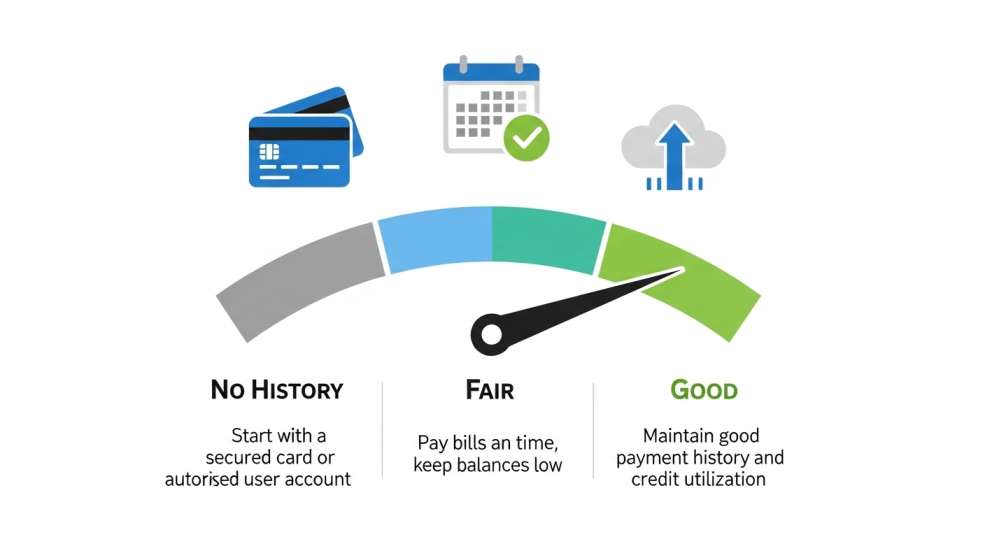
    credit card history meter
    Credit card history meter.

    The Best Secured Credit Cards for Newcomers to Canada in 2026

    We evaluated more than 12 secured credit cards available to Canadian newcomers based on: deposit requirements, annual fees, interest rates, credit bureau reporting, upgrade paths, and newcomer-specific perks. Here are our top picks:


    1. Scotiabank® Secured Visa* — Best Overall for Newcomers

    The Scotiabank Secured Visa is widely considered the gold standard for newcomers building credit in Canada, and for good reason. Scotiabank operates one of the most robust newcomer banking programs in the country (the StartRight® Program), meaning their branches are staffed with advisors who understand the unique needs of recent immigrants.

    Minimum Deposit: $500 | Annual Fee: $29 | Purchase Rate: 19.99%

    Why we like it: Your deposit earns interest in a GIC (Guaranteed Investment Certificate), meaning your money actually grows while you build credit. Scotia reports to both Equifax and TransUnion monthly, which maximizes your credit-building speed. After 12 months of responsible use, you may be eligible to transition to an unsecured card.

    Best suited for: Newcomers who want a trusted big-bank experience with a clear path to full banking products.


    2. Home Trust Secured Visa — Best for Low Interest

    Home Trust offers a rare no-annual-fee secured card — a genuine rarity in this category. Their low-interest version at 14.90% APR is one of the best rates available on any secured card in Canada, making it ideal for newcomers who might occasionally carry a balance while getting settled.

    Minimum Deposit: $500 | Annual Fee: $0 (standard) or $59 (low-interest) | Purchase Rate: 19.99% / 14.90%

    Why we like it: The no-fee version is genuinely free to hold, making it cost-effective for budget-conscious newcomers. It reports to both major bureaus.

    Consideration: Home Trust does not have a formal path to an unsecured card. [Source: Home Trust ]


    3. Capital One Guaranteed Mastercard® — Best for Lowest Deposit

    The Capital One Guaranteed Mastercard lives up to its name — approval is virtually guaranteed as long as you don’t have an active bankruptcy. At just $75 minimum deposit, it’s the most accessible entry point for newcomers who don’t yet have $500 saved to lock away.

    Minimum Deposit: $75 | Annual Fee: $59 | Purchase Rate: 19.80%

    Why we like it: Capital One actively reviews accounts for potential upgrade to their Platinum Mastercard or other unsecured products, typically after 12 months. Their customer service and fraud protection are well-regarded.

    Consideration: The $59 annual fee is relatively high for a secured card. Factor this into your budget. [Source: Capital One Canada ]


    4. TD Secured Visa Card — Best for TD Banking Customers

    If you’ve already opened a TD Bank account (a common first step for newcomers through TD’s New to Canada Banking Package), the TD Secured Visa is a natural next step. Having all your accounts at one institution simplifies transfers and oversight significantly.

    Minimum Deposit: $500 | Annual Fee: $29 | Purchase Rate: 19.99%

    Why we like it: TD reports to both Equifax and TransUnion, and there is a clear upgrade pathway to unsecured TD credit products. Your deposit sits in a TD Canada Trust savings account, earning interest.


    5. Refresh Financial Secured Visa — Most Flexible Deposit

    Refresh Financial stands out for its unusually wide deposit range ($200 to $10,000), giving newcomers full control over their credit limit from day one. This is particularly valuable if you want a higher limit to keep your utilization ratio low — a key factor in your credit score.

    Minimum Deposit: $200–$10,000 | Annual Fee: $12.95/yr | Purchase Rate: 17.99%

    Why we like it: The lowest annual fee on this list at $12.95/year, plus flexibility to grow your limit without applying for a new card. Refresh also reports to both bureaus.


    TABLE 1: Best Secured Credit Cards for Newcomers to Canada (2026 Comparison)

    Card Name

    Min. Deposit

    Annual Fee

    Interest Rate

    Credit Bureau

    Upgrade Path

    Best For

    Scotiabank® Secured Visa*

    $500

    $29/yr

    19.99%

    Equifax + TU

    Yes

    Overall Best Pick

    Home Trust Secured Visa

    $500

    $0 (No-fee) / $59 (low interest)

    14.90% / 19.99%

    Equifax + TU

    No

    Low Interest Option

    Capital One Guaranteed Mastercard®

    $75

    $59/yr

    19.80%

    Equifax + TU

    Yes

    Lowest Deposit

    TD Secured Visa Card

    $500

    $29/yr

    19.99%

    Equifax + TU

    Yes

    Big Bank Trust

    CIBC Secured Card

    $500

    $29/yr

    19.99%

    Equifax + TU

    Yes

    CIBC Banking Customers

    Refresh Financial Secured Visa

    $200–$10,000

    $12.95/yr

    17.99%

    Equifax + TU

    No

    Flexible Deposit Range

    * Rates and fees current as of early 2026. Always verify directly with the issuer before applying, as terms may change. [Source: Individual bank websites — verify at time of application]


    TABLE 2: Key Features Checklist — What to Look For in a Secured Credit Card

    Feature

    Scotiabank Secured

    Home Trust

    Capital One

    TD Secured

    Reports to Both Bureaus

    ✅

    ✅

    ✅

    ✅

    No Credit History Required

    ✅

    ✅

    ✅

    ✅

    Deposit Earns Interest

    ✅

    ❌

    ❌

    ✅

    Path to Unsecured Card

    ✅

    ❌

    ✅

    ✅

    Online Application Available

    ✅

    ✅

    ✅

    ✅

    Zero Liability Protection

    ✅

    ✅

    ✅

    ✅

    Newcomer Welcome Program

    ✅

    ❌

    ❌

    ✅

    How to Choose the Right Secured Card: A Newcomer’s Checklist

    With several solid options available, how do you pick the right one? Here’s a practical framework based on your specific situation:


    Consider Your Timeline

    If you’re planning to apply for a mortgage or car loan within 18 months, prioritize a card with an upgrade path and one that reports to both credit bureaus. The Scotiabank or TD options are strong here. If you’re in no rush, the Home Trust no-fee option saves you money.


    Consider Your Cash Flow

    Most secured cards require $500 upfront. If that’s tight in your first few months of settling, the Capital One Guaranteed Mastercard’s $75 minimum is a legitimate starting point. Don’t overextend your liquid savings just to get a higher credit limit — financial stability matters more.


    Consider Your Banking Relationships

    Many newcomers open bank accounts with one of Canada’s Big Five banks early in their settlement process. If you’re already banking with Scotiabank, TD, CIBC, or RBC, applying for that bank’s secured card creates a synergy that can accelerate your upgrade timeline.


    reviewing financial documents
    New immigrants showing financial documents.

    How to Use Your Secured Card Strategically (The 12-Month Plan)

    Getting approved is just step one. The real value of a secured credit card comes from how you use it. Here’s the strategy that credit counsellors and financial educators consistently recommend:


    The 30% Rule — Keep Your Utilization Low

    Credit utilization — the percentage of your available credit that you’re actually using — accounts for roughly 30% of your credit score in Canada. If your secured card has a $500 limit, try to keep your balance below $150 at any given time. Many credit experts suggest staying below 10% utilization for optimal score growth. [Source: Equifax Canada ]


    Pay in Full, Every Single Month

    Payment history is the single biggest factor in your credit score (approximately 35%). Missing even one payment can set your credit building back significantly. Set up automatic payments for at least the minimum payment as a safety net, but aim to pay your full balance every month to avoid interest charges.


    Use the Card for Small, Regular Purchases

    Secured cards work best when used regularly for predictable purchases — your morning coffee, a monthly streaming subscription, or your transit pass. This creates a consistent payment pattern that credit bureaus view positively. Avoid large discretionary purchases you can’t pay off immediately.


    Don’t Apply for Multiple Cards at Once

    Each credit application triggers a “hard inquiry” on your credit report, which can temporarily lower your score. As a newcomer, focus on one secured card for your first 12 months. Only apply for additional credit once your score is established and you have a specific reason (not just “more is better”).


    Real-World Scenario: Maria’s 18-Month Credit Journey

    Maria arrived in Toronto from Brazil in January 2025 as a permanent resident. She opened a Scotiabank account through the StartRight® program and applied for the Scotiabank Secured Visa with a $500 deposit.

    For 18 months, she used the card exclusively for groceries and her phone bill — never exceeding 20% of her limit. She paid the full balance every month via automatic payment. By month 6, she had a credit score of approximately 620. By month 12, it had climbed to 668. By month 18, Scotiabank proactively invited her to upgrade to a regular Scotiabank Visa card with a $2,000 limit and no deposit required.

    Maria’s experience mirrors what financial counsellors see consistently: disciplined, low-utilization use of a secured card, combined with on-time payments, can build a functional credit score in Canada within 12 to 18 months.

    newcomer approved credit card
    Newcomer approved credit card.

    Common Mistakes Newcomers Make With Secured Cards

    Even with the best intentions, these pitfalls can slow your credit-building progress:

    • Maxing out the card: Using 80–100% of your limit signals financial stress to lenders and hurts your score
    • Missing payments: Even one missed payment can remain on your credit report for up to 6 years in Canada
    • Closing the card too soon: The length of your credit history matters — keep your first card open as long as it makes financial sense
    • Not checking your credit report: You’re entitled to a free credit report from Equifax and TransUnion once per year. Review it for errors — especially as a newcomer, data errors are surprisingly common [Source: https://www.canada.ca/en/financial-consumer-agency/services/credit-reports-score/order-credit-report.html]
    • Ignoring the upgrade invitation: When your bank offers you an unsecured card, it’s a sign your credit-building strategy is working. Consider accepting — it’s a milestone

    Other Credit-Building Tools to Use Alongside Your Secured Card

    A secured credit card is the foundation, but it doesn’t have to be your only tool. Consider combining it with:

    Credit-builder loans: Offered by credit unions and some fintech companies, these products are specifically designed to establish credit through structured savings and reporting.

    Becoming an authorized user: If you have a trusted friend or family member in Canada with good credit, being added as an authorized user on their card can add positive history to your report — without you having to use the card.

    Koho or Neo Financial: These Canadian fintech platforms offer credit-building features with low friction. While they don’t replace traditional secured cards, they can complement your strategy.


    Frequently Asked Questions


    Can I apply for a secured credit card as a temporary resident or international student?

    Yes, in most cases. Capital One and Home Trust are generally the most flexible about residency status. Some major banks may require permanent resident status or a valid study/work permit. Always check directly with the issuer and bring your immigration documents.


    How long does it take to get a credit score in Canada?

    According to Equifax Canada, you typically need at least 3–6 months of credit activity before a credit score is generated. Your score begins to meaningfully grow after 6–12 months of consistent, responsible use. [Source: Equifax Canada — https://www.equifax.com/personal/education/credit/score/]


    Is my deposit safe? What happens to it?

    Yes — your deposit is held separately as collateral, not used to pay your bills. If you close the account in good standing (balance paid off), it is returned to you. At Scotiabank and TD, your deposit even earns interest in the meantime.


    When can I upgrade to a regular (unsecured) credit card?

    Most issuers review accounts after 12 months. Banks like Scotiabank and TD actively send upgrade offers to eligible customers. You can also proactively ask your bank to review your account after 12 months of clean payment history.


    Conclusion: Your Credit Journey Starts With One Smart Decision

    Building credit as a newcomer to Canada doesn’t have to be overwhelming. A secured credit card is the single most accessible, reliable, and effective tool available to you in your first year — and the results compound over time.

    To summarize the key takeaways from this guide:

    • Scotiabank Secured Visa is our top pick for most newcomers thanks to its interest-earning deposit, upgrade path, and newcomer support program
    • Home Trust offers the best no-fee option for cost-conscious newcomers
    • Capital One Guaranteed Mastercard requires the lowest deposit at just $75
    • Keep utilization below 30% (ideally 10%) and pay in full every month
    • Be patient — consistent responsible use over 12–18 months will transform your financial access in Canada


    Canada rewards financial discipline. Start with one secured card, use it wisely, and within 18 months, you’ll find yourself with options that weren’t available to you on arrival. Welcome to your Canadian financial journey.

    Immigrant couple standing in front of their new home.


    DISCLAIMER

    The information provided in this article is for general informational and educational purposes only and does not constitute financial, legal, or professional advice. ArriveThenThrive.ca is an independent editorial website and is not affiliated with, endorsed by, or sponsored by any of the financial institutions or credit card issuers mentioned in this article.

    Credit card terms, annual fees, interest rates, deposit requirements, and eligibility criteria are subject to change at any time without notice. Always verify current terms and conditions directly with the card issuer before applying. Individual results from credit-building activities will vary based on personal financial behaviour, income, and other factors.

    ArriveThenThrive.ca may earn a referral commission if you apply for a financial product through links on this site. This does not influence our editorial independence or recommendations. We are committed to providing honest, unbiased information to help newcomers make informed financial decisions.

    ArriveThenThrive best secured credit card 2026 build credit Canada Canadian credit cards credit building Canada credit card no credit history new immigrant Canada newcomers to Canada personal finance Canada secured credit card Canada
    Share. Facebook Twitter Pinterest LinkedIn Tumblr Email
    Previous ArticleHow to Build an Emergency Fund in Canada as a Newcomer
    Grace Valdez
    • Pinterest
    • Instagram

    Grace Valdez is a Toronto-based blogger dedicated to helping and navigating life in Canada. She writes practical, easy-to-follow guides on everything from frugal living, settling into Canadian banking and budgeting, to understanding visa pathways, PR applications, and provincial settlement resources. Grace's warm, no-jargon writing style has made her a trusted online resource for thousands of readers building in Canada.

    Related Posts

    How to Build an Emergency Fund in Canada as a Newcomer

    May 16, 2026

    GST/HST Credit in Canada: What It Is and How Newcomers Can Claim It

    May 12, 2026

    Understanding Your Employee Benefits Package in Canada

    May 8, 2026
    Leave A Reply Cancel Reply

    Demo
    Latest Posts

    Best Secured Credit Cards for Newcomers to Canada in 2026

    May 20, 20261 Views

    How to Build an Emergency Fund in Canada as a Newcomer

    May 16, 20263 Views

    GST/HST Credit in Canada: What It Is and How Newcomers Can Claim It

    May 12, 20262 Views

    Understanding Your Employee Benefits Package in Canada

    May 8, 20263 Views
    Stay In Touch
    • Facebook
    • Twitter
    • Pinterest
    • Instagram
    • YouTube
    • Vimeo
    Don't Miss

    Cost of Living in Canada by City in 2026: Toronto vs Vancouver vs Calgary vs Ottawa

    By Grace ValdezMarch 12, 2026

    If you’re planning a move to Canada — or you’re already here trying to figure…

    Best No-Fee Bank Accounts for Newcomers to Canada in 2026

    February 27, 2026

    Do You Have to Report Foreign Income on Canadian Taxes?

    February 27, 2026

    Subscribe to Updates

    Get the latest creative news from SmartMag about art & design.

    Demo
    About Us
    About Us

    You Arrived. Now Let's Make Your Money Work in Canada.

    Email Us: admin@arrivethenthrive.ca

    Facebook X (Twitter) Pinterest YouTube WhatsApp
    Our Picks

    Best Secured Credit Cards for Newcomers to Canada in 2026

    May 20, 2026

    How to Build an Emergency Fund in Canada as a Newcomer

    May 16, 2026

    GST/HST Credit in Canada: What It Is and How Newcomers Can Claim It

    May 12, 2026
    Most Popular

    Cost of Living in Canada by City in 2026: Toronto vs Vancouver vs Calgary vs Ottawa

    March 12, 2026109 Views

    Best No-Fee Bank Accounts for Newcomers to Canada in 2026

    February 27, 202695 Views

    Do You Have to Report Foreign Income on Canadian Taxes?

    February 27, 202692 Views
    © 2026 ThemeSphere. Designed by ThemeSphere.
    • Home
    • About Us
    • Privacy Policy
    • Disclaimer
    • Contact Us

    Type above and press Enter to search. Press Esc to cancel.

    Powered by
    ►
    Necessary cookies enable essential site features like secure log-ins and consent preference adjustments. They do not store personal data.
    None
    ►
    Functional cookies support features like content sharing on social media, collecting feedback, and enabling third-party tools.
    None
    ►
    Analytical cookies track visitor interactions, providing insights on metrics like visitor count, bounce rate, and traffic sources.
    None
    ►
    Advertisement cookies deliver personalized ads based on your previous visits and analyze the effectiveness of ad campaigns.
    None
    ►
    Unclassified cookies are cookies that we are in the process of classifying, together with the providers of individual cookies.
    None
    Powered by