


You just started your new life in Canada, and things are going well — but tax season is approaching fast. Maybe you still have a rental property back home, money sitting in a foreign bank account, or investments from your previous country. The big question you’re probably asking yourself: does any of that count on your Canadian tax return?
The short answer is: yes, almost certainly.
Canada taxes its residents on their worldwide income — meaning the Canada Revenue Agency (CRA) doesn’t care where in the world your money was earned. If you’re a Canadian tax resident, it needs to be reported. Full stop.
This guide breaks down exactly what you need to declare, which forms you’ll need, how double taxation works (and how to avoid paying taxes twice), and what happens if you miss a filing. Whether you’re a newcomer who just landed, a dual citizen, or someone with investments abroad, this article is your starting point.
The Golden Rule: Canadian Tax Residents Report Worldwide Income
Before anything else, you need to figure out your tax residency status — because this is what determines your reporting obligations. Your immigration status and your tax residency status are not the same thing.
What Makes You a Canadian Tax Resident?
The CRA determines tax residency based on your residential ties to Canada — things like having a home here, a spouse or dependants in Canada, personal property, social ties, and so on. As a general rule:
- If you’re a permanent resident or new immigrant, you’re considered a Canadian tax resident from the day you arrive in Canada.
- If you’re a temporary resident (work permit, study permit) and establish significant ties to Canada, you’re likely a tax resident.
- If you spend 183 days or more in Canada in a given tax year, you may be considered a deemed resident — even if you have no property or family here.
- Certain individuals like Canadian Forces members and government employees posted abroad are considered deemed residents regardless of where they live.
Once you’re a Canadian tax resident, the rule is clear: all foreign income is reportable and potentially taxable in Canada. This includes income earned before you had a chance to move it over or convert it — if it was earned after your arrival date, it counts.
Income you earned before arriving in Canada is generally not taxable here — but it should still be reported on your first Canadian return because it may affect the calculation of certain tax credits. Keep records of everything you had before you landed.
💡 Pro Tip for Newcomers
What Types of Foreign Income Must Be Reported?
Foreign income isn’t limited to employment paycheques. The CRA expects you to declare a wide range of income sources from around the world. Here’s what falls under the umbrella:
Employment and Self-Employment Income
If you work remotely for a foreign company, have a freelance contract with a non-Canadian client, or receive wages from an employer based overseas, that income is reportable on your Canadian T1 return. It doesn’t matter that your employer doesn’t issue a Canadian T4 — you still report it.
Investment Income (Dividends, Interest, Capital Gains)
Foreign dividends, interest on overseas bank accounts, and capital gains from selling foreign stocks or property all need to be declared. This includes U.S. stocks you hold in a Canadian brokerage account — yes, even those count as foreign income for CRA purposes.
Rental Income from Foreign Properties
Own a condo in the Philippines or a flat in the UK that generates rent? That rental income must be reported in Canada, just like domestic rental income. You can deduct related expenses (maintenance, property management, mortgage interest) to reduce the taxable amount.
Foreign Pension Income
Pension payments from a foreign government or employer are generally taxable in Canada. There are exceptions, however — some tax treaties between Canada and other countries may exempt certain pension types. Always verify with a tax professional or the CRA’s tax treaty information.
Inheritances and Gifts from Abroad
Canada doesn’t have an inheritance tax, so gifts and inheritances received from foreign sources are typically not income for tax purposes. However, if the inherited assets generate income going forward (interest, dividends, rent), that income must be reported. And if the inherited assets exceed $100,000 CAD in value, the T1135 form may apply (more on that below).
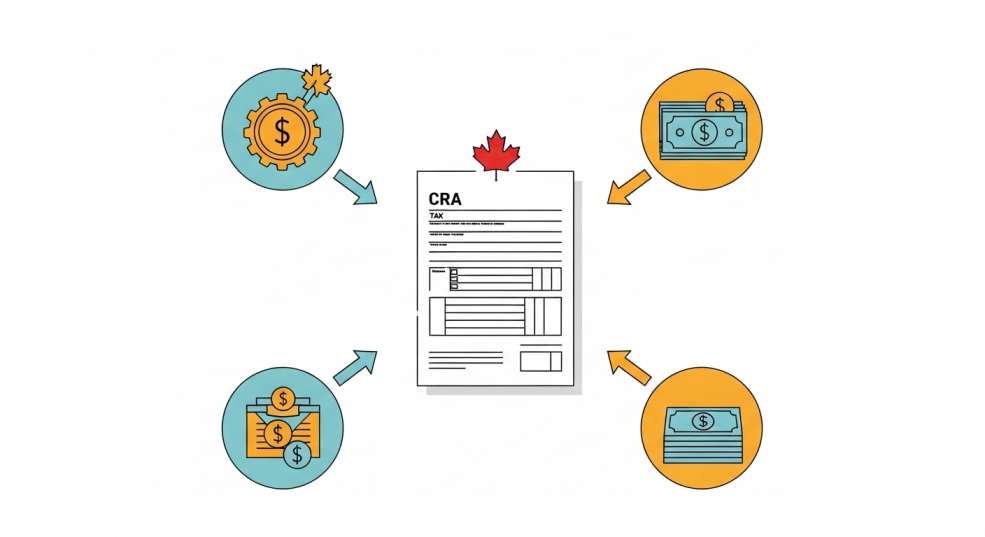
TABLE 1: Types of Foreign Income and How They’re Reported
Income Type | Reportable in Canada? | Where on T1 Return | Notes |
Foreign employment wages | Yes | Line 10400 | Convert to CAD using BoC rate |
Foreign self-employment income | Yes | T2125 schedule | Report net income; deduct business expenses |
Foreign dividends | Yes | Line 12100 | Foreign tax withheld is creditable |
Foreign interest income | Yes | Line 12100 | Includes interest on foreign bank accounts |
Foreign capital gains | Yes | Line 12700 / Schedule 3 | 50% inclusion rate applies |
Foreign rental income | Yes | T776 schedule | Net of allowable expenses |
Foreign pension | Usually yes | Line 11500 or 11600 | Treaty exemptions may apply |
Inheritance / Gift (principal) | No | N/A | Future income from asset is taxable |
How to Convert Foreign Income to Canadian Dollars
One practical step that trips up many filers: you must report all foreign income in Canadian dollars on your tax return. The CRA accepts and recommends using the Bank of Canada exchange rate. You can use either:
- The average annual rate for the year — convenient for income received in multiple transactions throughout the year (e.g., monthly dividends or salary)
- The rate on the specific date income was received — more precise but requires more record-keeping
The Bank of Canada posts historical exchange rates on its website at bankofcanada.ca. The CRA also accepts rates from publishers like Bloomberg, OANDA, and Thomson Reuters as long as you use the same source consistently year over year.
Won’t I Get Taxed Twice? Understanding the Foreign Tax Credit
This is one of the most common concerns among newcomers and Canadians with overseas assets — and it’s a valid one. Here’s the good news: Canada has mechanisms specifically designed to prevent double taxation.
The Foreign Tax Credit (FTC)
If you paid tax to a foreign government on income that’s also taxable in Canada, you can claim a Foreign Tax Credit on your Canadian return. This credit reduces your Canadian tax payable by the amount of foreign tax you already paid, up to the equivalent Canadian tax on that income.
Example: You receive $10,000 USD in dividends from a U.S. company. The U.S. withholds 15% ($1,500 USD) in withholding tax. When you report these dividends on your Canadian return, you can claim the foreign tax paid as a credit against the Canadian tax owing on the same income. You report the foreign tax on Line 40500 of your T1 return.
Canada’s Tax Treaties
Canada has signed tax treaties with over 90 countries to prevent double taxation and clarify which country has the right to tax specific types of income. These treaties often reduce withholding tax rates and can exempt certain income types (like some pensions) from Canadian tax.
Key countries with Canadian tax treaties include the United States, United Kingdom, India, Philippines, China, Mexico, Germany, France, and Australia. If your home country has a treaty with Canada, reviewing its terms is highly worthwhile — and a qualified cross-border tax professional can help you benefit from it.
Form T1135: The Foreign Property Verification Statement
Beyond reporting foreign income on your regular T1 return, there’s a separate form you may need to file if you own foreign assets — regardless of whether those assets generate income or not.
What Is Form T1135?
The T1135 — Foreign Income Verification Statement — is an annual disclosure form required by the CRA. You must file it if you own specified foreign property with a total cost exceeding CAD $100,000 at any point during the tax year.
Note that the $100,000 threshold is based on the adjusted cost base (what you paid for the asset plus acquisition costs) — not the current market value. Also note that this is always evaluated in Canadian dollars, so exchange rate fluctuations can push you over the threshold even if the underlying foreign currency value hasn’t changed.
What Counts as Specified Foreign Property?
- Foreign bank and investment accounts
- Shares in non-Canadian corporations (including U.S. stocks held in a Canadian brokerage account)
- Foreign bonds, debentures, and notes receivable
- Interests in foreign trusts
- Real property located outside Canada (excluding personal-use properties like vacation homes)
- Precious metals and futures contracts held outside Canada
Notably, assets held in registered accounts like RRSPs, TFSAs, or RRIFs are excluded from T1135 reporting — even if those registered accounts hold foreign securities.
Part A vs. Part B Reporting
The T1135 has a two-tier structure depending on the size of your foreign holdings:
- Part A (Simplified): For total foreign property costs between $100,000 and $249,999. You simply check boxes for the types of property held — no need to list each item individually.
- Part B (Detailed): Required when your total foreign property cost reaches $250,000 or more. You must list each property individually with details like cost, fair market value, income earned, and gains/losses.
TABLE 2: T1135 Reporting Requirements at a Glance
Foreign Property Cost (CAD) | T1135 Required? | Reporting Method | Due Date | Filing Method |
Under $100,000 | No | N/A | N/A | N/A |
$100,000 – $249,999 | Yes | Part A – Simplified (check boxes) | Same as T1 return (Apr 30) | Electronic or paper |
$250,000 or more | Yes | Part B – Detailed (each property listed) | Same as T1 return (Apr 30) | Electronic preferred |
Year of immigration to Canada | Exempt for first year | N/A | N/A | N/A |
Many newcomers assume that if they haven’t sold their foreign assets, they don’t need to disclose them. Wrong. Even if a foreign property generates no income and you never sold it, you must still file T1135 if the total adjusted cost base exceeds $100,000 at any point during the tax year.
⚠️ Common Misconception

What Are the Penalties for Not Reporting Foreign Income?
The CRA treats foreign income and asset non-disclosure very seriously. If you miss a filing or omit foreign income from your return, the consequences can range from financial penalties to extended audit windows — and in extreme cases, criminal investigation.
Late Filing Penalties for T1135
- $25 per day for each day the form is late, subject to a minimum penalty of $100
- Maximum of $2,500 per tax year for ordinary late filing
- Gross negligence penalties: $500 per month up to 24 months ($12,000 maximum) if non-compliance is deemed willful
- After 24 months: penalty escalates to the greater of $24,000 or 5% of the cost of the specified foreign property
Extended Reassessment Period
Here’s a consequence that catches many taxpayers off guard: if you fail to file T1135 on time, the CRA’s normal 3-year reassessment period is extended by an additional 3 years — meaning the CRA can audit your return up to 6 years after assessment. And this extended window applies to your entire return, not just the foreign property section.
Criminal Prosecution
While rare, intentional concealment of foreign assets combined with unreported foreign income can lead to criminal tax evasion charges, resulting in fines and potential imprisonment. The CRA actively uses international tax information exchange agreements to detect undisclosed foreign income.
What If You Forgot to Report? The Voluntary Disclosures Program
If you realize you should have been reporting foreign income or filing T1135 but haven’t, don’t panic. The CRA offers a lifeline called the Voluntary Disclosures Program (VDP), which allows taxpayers to come forward and correct past errors before the CRA comes looking.
As of October 2025, the VDP has been updated with more accessible terms:
- Unprompted disclosures: 100% penalty relief and 75% interest relief on taxes owing
- Prompted disclosures: Up to 100% penalty relief and 25% interest relief on taxes owing
However, the VDP only applies if you come forward before the CRA has contacted you about the issue. Once the CRA is investigating, the program is no longer available for those matters. If you have multiple years of non-compliance or complex situations, consulting a CPA or tax lawyer before applying to VDP is strongly recommended.
Special Scenarios: Common Situations for Newcomers and Expats
Scenario 1: Newcomer with Savings in a Foreign Bank Account
Aisha moved to Canada from Nigeria in March 2024. She has a savings account back home with a balance equivalent to CAD $85,000. She earns about $1,200 per year in interest on it.
What she must do: Report the $1,200 interest income on her T1 return (Line 12100), converted to CAD. Since her foreign account balance is under $100,000, T1135 is not required. She should still monitor the balance — if it rises above $100,000 at any point in a future tax year, T1135 will apply.
Scenario 2: Immigrant with a Rental Property Abroad
Carlos moved to Canada from the Philippines in 2023 and owns a condo back home worth CAD $150,000 that generates rental income.
What he must do: (1) Report net rental income on his T1 return using the T776 form; (2) File T1135 for the condo since the cost exceeds $100,000; (3) Claim any Philippine withholding tax paid as a Foreign Tax Credit on Line 40500. Note: Personal-use vacation properties are exempt from T1135, but a property that generates rental income is not.
Scenario 3: Canadian Resident with U.S. Investment Account
Lin is a Canadian citizen who has a U.S. brokerage account with $200,000 CAD in U.S. stocks. She receives dividends and had a capital gain this year.
What she must do: (1) Report all dividends and capital gains on her T1 return; (2) File T1135 since her foreign investments exceed $100,000 (Part A simplified method applies); (3) Claim any U.S. withholding tax as a Foreign Tax Credit. If her U.S. holdings ever reach $250,000, she’ll need to switch to Part B detailed reporting.
Practical Steps: How to Report Foreign Income Correctly
Step 1: Determine Your Residency Status
Confirm when you became a Canadian tax resident. New immigrants are tax residents from their date of arrival. This date determines which income years are reportable.
Step 2: Inventory All Foreign Income and Assets
Make a list of every source of foreign income (wages, dividends, rent, pensions) and every foreign asset (bank accounts, investment accounts, real property). Note the dates, amounts, and which country holds them.
Step 3: Convert to Canadian Dollars
Use the Bank of Canada average annual exchange rate or the rate on each transaction date. Be consistent in your source from year to year. Access historical rates at bankofcanada.ca.
Step 4: Report Foreign Income on Your T1 Return
Include all foreign income on the appropriate lines of your T1 General return. Foreign employment income, investment income, rental income, and pension income each go to different lines. Consider using CRA-certified tax software that includes foreign income fields.
Step 5: File T1135 If Applicable
If your specified foreign property exceeded CAD $100,000 at any point during the year, complete and file Form T1135 by your tax return deadline (typically April 30 for individuals). File electronically when possible.
Step 6: Claim the Foreign Tax Credit
If you paid taxes to a foreign government, report the foreign tax on Line 40500 of your T1 return. Use Schedule T2209 to calculate the credit. Keep your foreign tax assessment notices or withholding statements as supporting documents.
Step 7: Keep Records for at Least Six Years
The CRA can audit your return for up to six years (or longer if foreign income is involved). Retain copies of foreign income statements, bank records, tax assessments, and your filed returns.
Frequently Asked Questions About Foreign Income and Canadian Taxes
Do I need to report foreign income if I already paid tax on it in another country?
Yes. You still need to report it on your Canadian return. However, you can claim a Foreign Tax Credit to offset the Canadian tax owing, so you don’t end up paying full taxes in both countries.
What if my foreign income is below the basic personal amount?
Even if your total income (including foreign) is low enough that no Canadian tax is owing, you should still report foreign income. Filing accurately protects you from future CRA inquiries and ensures you receive any applicable credits and benefits.
I inherited property abroad. Do I need to file T1135?
The year you inherit the property, it is deemed to have been received at fair market value. If that fair market value exceeds $100,000 CAD, T1135 applies going forward. The year of immigration is an exception — T1135 is not required for your first year as a Canadian tax resident.
My RRSP holds U.S. stocks. Do I need to file T1135?
No. Investments held inside registered accounts (RRSP, RRIF, TFSA) are exempt from T1135 reporting, even if the holdings are foreign securities.
What exchange rate should I use?
The CRA recommends Bank of Canada exchange rates. You can use either the annual average rate or the rate on the date you received each payment. Use the same source consistently year over year.

Key Takeaways: Reporting Foreign Income on Canadian Taxes
Let’s bring it all together. Here are the most important points to remember:
- Canadian tax residents must report all worldwide income on their T1 return — regardless of where it was earned.
- Foreign income includes employment wages, self-employment, dividends, interest, capital gains, rental income, and pensions from outside Canada.
- You can avoid double taxation by claiming the Foreign Tax Credit (Line 40500) for taxes already paid abroad.
- If you own specified foreign property costing more than CAD $100,000 at any point during the year, you must file Form T1135.
- Missing the T1135 deadline can result in penalties starting at $100 and escalating up to $24,000 or more in serious cases, plus an extended CRA audit window.
- If you’ve fallen behind on foreign income reporting, the Voluntary Disclosures Program (VDP) may allow you to catch up with reduced penalties.
- Always convert foreign income to Canadian dollars using consistent, verifiable exchange rate sources like the Bank of Canada.
Navigating foreign income on Canadian taxes isn’t always simple, but it’s manageable once you know the rules. If you have a complex situation — multiple countries, large foreign holdings, or years of missed filings — working with a CRA-savvy accountant or cross-border tax professional is worth the investment. The cost of professional advice is almost always less than the cost of getting it wrong.
Sources & Further Reading
- CRA Foreign Income Verification Statement (T1135)
- CRA Questions and Answers About T1135 Penalties
- CRA Voluntary Disclosures Program
- Bank of Canada Exchange Rates
- MoneySense – How to Report Foreign Income in Canada (Jason Heath, CFP)
- TurboTax Canada – Foreign Income and Tax Treaties
- McCay Duff – How Canadian Taxation Works for Foreign Income
- Cardinal Point Wealth – Understanding Form T1135
DISCLAIMER
The information provided in this article is for general educational and informational purposes only. It does not constitute professional tax, legal, or financial advice, and should not be relied upon as such. Tax rules are complex, subject to change, and vary based on individual circumstances. The Canada Revenue Agency (CRA) guidelines referenced in this article are based on information available as of early 2026 and may have changed. ArriveThenThrive.ca makes no representations or warranties regarding the accuracy, completeness, or timeliness of the information presented. Always consult a qualified Canadian tax professional, chartered professional accountant (CPA), or tax lawyer before making decisions about your tax obligations. Do not use this article as a substitute for professional advice tailored to your specific situation.
© 2026 ArriveThenThrive.ca — Your Canadian Newcomer Resource
