

Imagine earning your first paycheck in Canada and wondering just how much of it you actually keep. Or maybe you’ve been filing taxes here for years and never quite understood why that one line — Line 30000 — just automatically fills itself in. That’s the Basic Personal Amount (BPA), and it might be quietly saving you more money than you realize.
Every person who files a Canadian income tax return is entitled to claim the Basic Personal Amount — a non-refundable federal tax credit designed to ensure that a foundational slice of your income is effectively protected from federal taxation. It’s one of the most universal tax credits in the Canadian system, yet it’s often overlooked or misunderstood, especially by newcomers navigating their first Canadian tax return.
In this article, we’ll break down exactly what the Basic Personal Amount is, how it works mathematically, how much you can claim in 2025, how it varies by province, and smart strategies to get the most out of it — whether you’re a long-time resident, a newcomer, or someone supporting a spouse or family member.
What Is the Basic Personal Amount in Canada?
The Basic Personal Amount (BPA) is a non-refundable tax credit that allows Canadian residents to earn a minimum amount of income before owing federal income tax. Put simply, it’s the government saying: “Everyone deserves a livable income before we start taxing them.”
According to the Canada Revenue Agency (CRA), the BPA applies to all Canadian residents and deemed residents. It is claimed on Line 30000 of your federal tax return, and an equivalent amount is also available at the provincial level (claimed on Line 58040 of your provincial Form 428).
Non-Refundable vs. Refundable: What’s the Difference?
This is where a lot of people get confused, so let’s be crystal clear:
Non-refundable means the BPA reduces the amount of income tax you owe, but if the credit is more than your total tax owing, you don’t receive the difference back as a refund. In other words, it can reduce your tax bill to zero — but not below zero.
Refundable credits (like the GST/HST credit) can actually result in money coming back to you even if you owe no tax.
The BPA works as follows: the federal BPA amount is multiplied by the lowest federal tax rate (15% for 2025) to produce the actual dollar credit. So if the BPA is $16,129, the actual credit you receive is $16,129 × 15% = $2,419.35 off your federal tax bill.
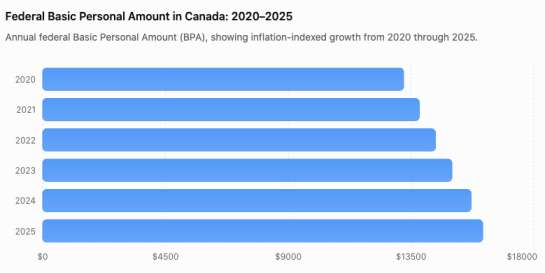
How Much Is the Basic Personal Amount in 2025?
For the 2025 tax year, the federal Basic Personal Amount is income-dependent, which is a relatively recent change:
- If your net income is $177,882 or less: you can claim the full $16,129
- If your net income is more than $253,414: the BPA is reduced to a minimum of $14,538
- If your income falls between those two thresholds: use the CRA’s Federal Worksheet to calculate your exact claimable amount
This tapering design means that higher-income earners still receive some benefit from the BPA, but those with more modest incomes get the full credit — which is very intentional from a fairness standpoint.
For the 2026 tax year, the federal BPA has been updated to approximately $16,452 (note: confirm the final figure with the CRA, as 2026 amounts are subject to formal announcement).
TABLE 1: Federal Basic Personal Amount 2024 vs. 2025
| Detail | 2024 | 2025 |
|---|---|---|
| Maximum BPA (lower income) | $15,705 | $16,129 |
| Minimum BPA (higher income) | $14,156 | $14,538 |
| Income threshold (full BPA) | $173,205 or less | $177,882 or less |
| Income threshold (min BPA) | $246,752 or more | $253,414 or more |
| Federal tax rate applied | 15% | 15% |
| Maximum federal tax credit | $2,355.75 | $2,419.35 |
Source: Canada Revenue Agency & Advisor.ca
Provincial Basic Personal Amounts: Your Province Matters
Here’s something many Canadians don’t fully appreciate: every province and territory has its own Basic Personal Amount, and they vary quite dramatically. Your total BPA benefit combines both federal and provincial credits — so where you live can significantly impact how much tax you save.
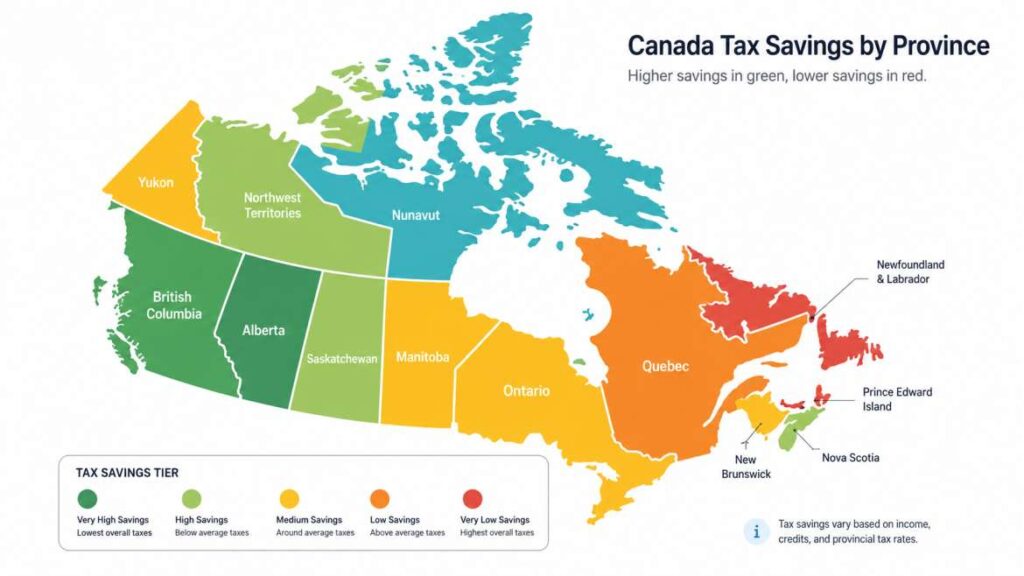
TABLE 2: Provincial Basic Personal Amounts for 2025
| Province / Territory | 2025 BPA | Provincial Tax Rate | Estimated Provincial Credit |
|---|---|---|---|
| Alberta | $22,323 | 10% | $2,232.30 |
| British Columbia | ~$11,981 | 5.06% | ~$606.24 |
| Manitoba | $15,780* | 10.8% | $1,704.24 |
| New Brunswick | $12,458 | 9.4% | $1,171.05 |
| Newfoundland & Labrador | $11,067 | 8.7% | $962.83 |
| Nova Scotia | $11,744 | 8.79% | $1,032.40 |
| Ontario | $12,747 | 5.05% | $643.72 |
| PEI | ~$12,000 | 9.65% | ~$1,158.00 |
| Quebec | ~$17,183 | 14% | ~$2,405.62 |
| Saskatchewan | $17,661 | 10.5% | $1,854.41 |
| Northwest Territories | $16,593 | 5.9% | $978.99 |
| Nunavut | $17,925 | 4% | $717.00 |
| Yukon | $15,705 | 6.4% | $1,005.12 |
*Manitoba’s 2025 amounts remain at 2024 levels per 2025 budget freeze. Sources: CRA, TaxTips.ca, Fidelity Canada
Alberta stands out significantly — with a provincial BPA of $22,323, residents there enjoy one of the largest combined BPA benefits in the country.
How to Calculate Your BPA Tax Credit: A Real-Life Example
Let’s make this concrete with a practical scenario.
Meet Priya. She moved to Ontario from India in 2023 and now earns $65,000 per year as a nurse. Here’s how the Basic Personal Amount works for her in 2025:
Federal BPA calculation:
- Priya’s net income ($65,000) is below $177,882 → she claims the full federal BPA of $16,129
- Federal tax credit = $16,129 × 15% = $2,419.35
Ontario provincial BPA calculation:
- Ontario’s 2025 BPA is $12,747
- Ontario’s lowest tax rate is 5.05%
- Provincial tax credit = $12,747 × 5.05% = $643.72
Combined total BPA tax credit for Priya: $2,419.35 + $643.72 = $3,063.07
That’s over $3,000 in tax savings Priya receives simply for existing and filing her taxes — not because she did anything special, but because Canada’s tax system builds in this floor protection for everyone.
Who Is Eligible to Claim the Basic Personal Amount?
The short answer: almost everyone who files a Canadian tax return.
You are generally eligible if you:
- Were a resident of Canada for all or part of the tax year
- Are a deemed resident (such as certain government workers or military personnel abroad)
- Are a newcomer to Canada (with a prorated BPA based on your arrival date)
Special Rules for Newcomers and Immigrants
If you arrived in Canada partway through the year, your Basic Personal Amount is prorated based on the number of days you were a Canadian resident. For example, if you arrived on May 6, 2025, you would calculate the fraction of the year you were present and apply that to the full BPA amount. According to the CRA’s newcomer tax guide, someone who arrived May 6, 2025 and earned $50,000 in Canada for the rest of the year would claim approximately $10,605 in BPA — rather than the full $16,129.
There’s also the 90% rule: to claim the full (unprorated) non-refundable tax credits including BPA, your Canadian-source income for the non-resident portion of the year must represent 90% or more of your total world income during that period.

How the BPA Is Indexed to Inflation
One detail worth understanding: the Basic Personal Amount is adjusted annually for inflation, using the federal Consumer Price Index (CPI). This is called indexation, and it ensures your effective tax-free threshold keeps pace with the rising cost of living.
The 2025 federal amounts increased by approximately 2.7% compared to 2024 (the 2024 increase was 4.7%, and 2023’s was 6.3% — reflecting the post-pandemic inflation spike). Each province sets its own indexation factor, and some — like British Columbia — have even paused indexation for certain years due to budget considerations.
This annual automatic adjustment is one of the less-visible ways that Canada’s tax system tries to avoid “bracket creep” — the phenomenon where inflation quietly pushes taxpayers into higher brackets without any real income gains.
Smart Strategies to Maximize Your Basic Personal Amount
Understanding the BPA is one thing. Using it strategically is another. Here are practical, actionable ways to get the most from this credit.
1. Transfer Unused BPA to a Spouse
If one spouse earns less income and doesn’t use their full Basic Personal Amount, the unused portion can be transferred to the higher-earning spouse. For example, if one partner earns only $8,000 and uses just $8,000 of their $16,129 BPA, the remaining $8,129 can be transferred to their spouse’s return — generating an additional credit.
2. Combine with Other Non-Refundable Credits
The BPA stacks with other non-refundable credits like the age amount (for those 65+), caregiver credits, disability amounts, and the Canada employment amount. When combined, these credits can significantly reduce your total tax payable to near zero.
3. Know Your Province Before Filing
Because provincial BPA amounts vary so much, being aware of your home province’s rules matters. If you moved provinces during the year, the BPA you claim is based on the province where you resided on December 31 of that tax year.
4. File Even If You Have Low or No Income
Even if you earned below the BPA and owe no federal tax, filing a return is essential. It unlocks access to the GST/HST credit, Canada Child Benefit (CCB), Trillium Benefit (in Ontario), and other government programs. For newcomers especially, filing early opens the door to benefits that compound over time.
The BPA and the Broader Canadian Tax Picture
The Basic Personal Amount doesn’t exist in isolation — it’s one piece of a larger system of non-refundable tax credits. Understanding how it fits in helps you see the full picture.
Here’s how the BPA interacts with Canada’s progressive federal tax brackets in 2025:
- 15% on the first $57,375
- 20.5% on income from $57,375 to $114,750
- 26% on income from $114,750 to $177,882
- 29% on income from $177,882 to $253,414
- 33% on income above $253,414
The BPA effectively creates a tax-free zone at the bottom of these brackets. Because the credit is calculated at the 15% rate, it acts most powerfully for lower-income earners — which is by design. It ensures that those earning at or near the BPA threshold pay little to no federal income tax at all.
Frequently Asked Questions About the Basic Personal Amount
Is the Basic Personal Amount the same as a tax deduction?
No. A deduction reduces your taxable income, while the BPA is a tax credit — it directly reduces the tax you owe. Tax credits are generally more valuable dollar-for-dollar than deductions, because a $16,129 deduction at a 15% tax rate gives you the same $2,419 reduction as the BPA credit does, but deductions get more valuable only as your marginal rate rises.
Do I have to apply for the Basic Personal Amount?
No. The BPA is automatically applied when you file your tax return. Tax software like TurboTax, H&R Block, Wealthsimple Tax, or SimpleTax will claim it for you. On a paper return, simply enter the amount on Line 30000.
Does the Basic Personal Amount change every year?
Yes. It’s indexed to inflation and updated annually by the CRA. Always verify the current year’s amount on the CRA website before filing.
What if I only lived in Canada for part of the year?
Your BPA will be prorated based on your days of Canadian residency. The CRA provides examples and worksheets to calculate this on their newcomers page.
Can I claim both the federal and provincial BPA?
Yes — absolutely. Both amounts are separate, and both reduce your tax owed. The combined benefit can be substantial, especially in provinces with higher BPA amounts like Alberta or Saskatchewan.
Conclusion: Don’t Leave This Credit on the Table
The Basic Personal Amount is one of the most universal and accessible tax credits in the Canadian system. Whether you’re a student working a first part-time job, a newcomer filing your first return, a seasoned professional, or a retired senior, the BPA quietly works in your favour every single year.
Here’s a quick summary of what we covered:
- The BPA is a non-refundable federal tax credit claimed on Line 30000, worth up to $2,419.35 in federal tax savings for 2025
- The 2025 federal BPA is $16,129 for those earning under $177,882, tapering to $14,538 at higher incomes
- Every province and territory has its own BPA, and the combined federal + provincial credit can save you over $3,000 to $4,600+ annually depending on where you live
- Newcomers to Canada receive a prorated BPA based on their days of residency
- Spouses can transfer unused BPA amounts to maximize the household benefit
The best move you can make? File your return every year, even in low-income years. Not only does it lock in your BPA benefit — it opens the door to dozens of other credits, benefits, and government programs designed to help you thrive financially in Canada.
For the most up-to-date figures, always verify directly with the CRA’s official Basic Personal Amount page.
Sources & References
- Canada Revenue Agency – Line 30000: Basic Personal Amount
- Fidelity Canada – BPA Tax Credit: How to Maximize
- Advisor.ca – Essential Tax Numbers for 2025
- TaxTips.ca – 2025 Non-Refundable Personal Tax Credits – Base Amounts
- Canada.ca – Federal Non-Refundable Tax Credits for Newcomers and Emigrants
- Canada.ca – Newcomers to Canada and the CRA
- Scotiabank Advice+ – New to Canada: Filing Your First Tax Return
- H&R Block Canada – Basic Personal Amount
⚠️ DISCLAIMER
The information provided in this article is for general informational and educational purposes only. It does not constitute professional tax, financial, or legal advice. Tax rules, credit amounts, and eligibility criteria change annually and may differ based on your personal circumstances, province of residence, and immigration status.
Always verify current figures directly with the Canada Revenue Agency (CRA) and consult a qualified Canadian tax professional or accountant before making decisions based on this information. The author and ArriveThenThrive.ca are not responsible for any errors, omissions, or outcomes resulting from the use of this content.
Last updated for the 2025 tax year. Provincial BPA amounts are approximate and subject to change. Confirm all figures with the CRA or your provincial tax authority.
