
You’ve done the hard part. You navigated the immigration process, packed your life into a few suitcases, and landed in Canada with big dreams and an even bigger to-do list. Then comes the moment that catches nearly every newcomer off guard: you walk into a bank, ask about a credit card, and are told — politely, but firmly — that you don’t have a Canadian credit history.
It’s a classic catch-22. You need credit to build credit. But how do you get started when you’re essentially a financial ghost in the Canadian system?
Here’s the good news: Canada’s financial landscape in 2026 is more newcomer-friendly than it has ever been. Banks are actively competing for your long-term business, and that competition has produced a genuinely impressive lineup of credit cards designed specifically for people in your situation — no Canadian credit history required.
In this guide, we’ll walk you through the best credit cards for newcomers to Canada, explain the difference between secured and unsecured options, show you exactly how to use a credit card to build a strong Canadian credit score fast, and help you avoid the traps that slow most newcomers down. Let’s get started.
Why Your Credit History Doesn’t Follow You to Canada
One of the most surprising discoveries for newcomers — even those who had excellent credit back home — is that Canadian credit bureaus (Equifax and TransUnion Canada) maintain entirely separate records from international bureaus. Your perfect credit score from India, the Philippines, Nigeria, or anywhere else simply doesn’t exist in the Canadian system.
This means that on day one in Canada, regardless of your financial background, income, or professional status, you essentially start at zero. Lenders, landlords, mobile carriers, and even some employers may check your Canadian credit score. Without one, you’re at a disadvantage.
There is one notable exception worth knowing about: Scotiabank’s StartRight Program has partnered with Nova Credit, a service that translates international credit histories from countries like India, Mexico, the Philippines, and several others into a Canadian-equivalent report. If your home country is supported, this can give you an immediate leg up — including access to a higher credit limit right away.
Learn more about Nova Credit’s supported countries at novacredit.com
Secured vs. Unsecured Credit Cards: What Newcomers Actually Need to Know
Before we rank specific cards, you need to understand this fundamental distinction, because it determines which cards you can apply for and when.
Unsecured Newcomer Credit Cards
These are the most common type of credit card. They don’t require you to put money down. Instead, the bank extends you a credit limit based on their assessment of your creditworthiness — but in special newcomer programs, they rely on your income, immigration status, and sometimes international credit data instead of a Canadian credit score.
The catch? Not every bank will approve you immediately, and those that do often start you with a modest credit limit. Still, these are ideal if you’ve just arrived, have a job offer or income already, and want to get started building credit without tying up cash in a deposit.
Secured Credit Cards
Secured cards require you to put down a refundable security deposit, which typically becomes your credit limit. The bank holds onto this deposit while you use the card. Because the bank isn’t taking a financial risk, approval is essentially guaranteed — no credit history, no income verification in some cases, just a SIN number and the deposit amount.
This makes secured cards the most accessible option on day one, especially if you haven’t yet found employment or are waiting for your first paycheque. After 6 to 12 months of responsible use, most secured cards allow you to upgrade to an unsecured card and get your deposit back.
TABLE 1: Secured vs. Unsecured Credit Cards for Newcomers — At a Glance
Feature | Secured Credit Card | Unsecured Newcomer Card |
Approval | Guaranteed (no credit check) | Based on income & newcomer status |
Security Deposit | Required ($50–$10,000) | Not required |
Credit Limit | Equal to your deposit | $500–$15,000 (bank decides) |
Rewards | Rare (Neo is an exception) | Often included |
Annual Fee | Usually $0 | Often $0 for entry cards |
Best Time to Use | Day 1 of arrival in Canada | After ~3–6 months or with newcomer program |
Credit Building Speed | Moderate | Moderate to Fast |
Example Card | Home Trust Secured Visa | BMO CashBack Mastercard |
Source: ArriveThenThrive.ca research based on publicly available bank terms, April 2026.
The Best Credit Cards for Newcomers to Canada in 2026
We evaluated these cards based on approval accessibility for newcomers, annual fees, rewards structure, credit-building potential, and overall value. Here are our top picks:
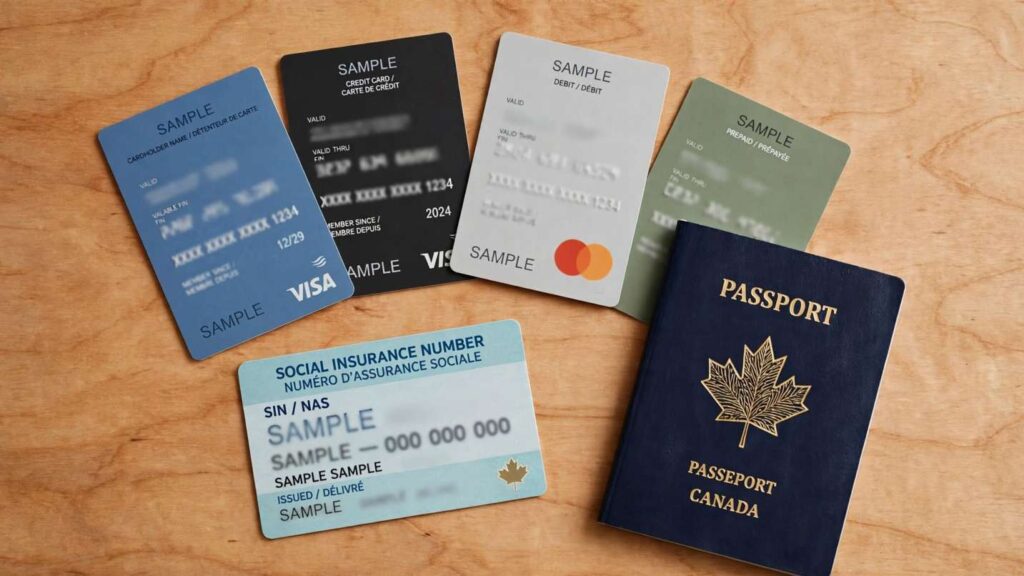
1. BMO CashBack Mastercard — Best Overall Newcomer Card
Annual Fee: $0 | Purchase Rate: 20.99% | No Credit History Required: Yes
The BMO CashBack Mastercard has earned its reputation as the top choice for newcomers two years running, and for good reason. Under BMO’s NewStart Program, this card is available without a Canadian credit history, which means you can walk into a BMO branch shortly after landing and walk out with a credit card in hand.
What makes it particularly attractive is the earn rate: 3% cash back on groceries, 1% on recurring bill payments, and 0.5% on all other purchases — all with no annual fee. For newcomers spending heavily on groceries while getting settled, the 3% rate delivers real, tangible value from the first swipe.
The card also comes with a welcome offer of up to 5% cash back in your first three months (on up to $2,500 in eligible purchases), giving you an immediate reward for choosing BMO.
📎 Apply or learn more: bmo.com/en-ca/main/personal/credit-cards/cashback/bmo-cashback-mastercard
2. Scotiabank Scene+ Card via StartRight® Program — Best for International Credit History
Annual Fee: $0 | Purchase Rate: 20.99% | No Credit History Required: Yes (Nova Credit integration available)
The Scotiabank StartRight® Program is one of the most comprehensive newcomer banking packages in Canada. It’s one of the only programs that lets you leverage your international credit history through Nova Credit — meaning if you’re coming from India, Mexico, the Philippines, or other supported countries, your good credit record can follow you here and help you get a higher credit limit immediately.
The Scene+ card within this program earns 2 Scene+ points per $1 spent at Sobeys, Safeway, IGA, and other participating grocers, plus 1 point per $1 everywhere else. Points are redeemable for groceries, movies, travel, and more — making it one of the more flexible rewards programs available to newcomers.
📎 Learn more: startright.scotiabank.com/ca/en/credit-cards.html
3. RBC Newcomer Advantage Program (ION Visa / Cash Back) — Best for Banking Integration
Annual Fee: $0–$48 | Purchase Rate: 20.99% | No Credit History Required: Yes | Credit Limit: Up to $15,000 for permanent residents
RBC’s Welcome to Canada program is one of the most comprehensive offerings in the country. If you’re a permanent resident, RBC may offer you a credit limit of up to $15,000 — even without Canadian credit history — which is remarkably high for a newcomer product. The program also accepts foreign credit history and income verification from your home country.
The no-fee RBC ION Visa is an excellent starting card, earning Avion points on groceries, dining, gas, streaming, and transit. If you want to earn points that can eventually be redeemed for flights or gift cards, this card fits naturally into the RBC ecosystem.
📎 Learn more: rbc.com/newcomers
4. TD Cash Back Visa — Best for TD Banking Clients
Annual Fee: $0 | Purchase Rate: 20.99% | No Credit History Required: Yes
TD has significantly expanded its newcomer offerings and now provides guaranteed approval for qualified newcomers through its structured program. The TD Cash Back Visa earns 1% cash back on groceries, gas, and recurring bill payments — modest, but reliable. If you’re already banking with TD, consolidating your banking and credit card relationship here simplifies your financial life considerably.
TD also offers a limited-time welcome bonus: earn up to $150 cash back in the first three months, making it a solid option if you’re opening your first Canadian account at TD.
5. Home Trust Secured Visa — Best Guaranteed Approval Card
Annual Fee: $0 | Purchase Rate: 19.99% | No Credit Check: Yes | Minimum Deposit: $500
If you want certainty — no application uncertainty, no waiting — the Home Trust Secured Visa is the gold standard. With no credit check required, no annual fee, and a slightly lower-than-average interest rate of 19.99%, it’s the most practical first card for newcomers who haven’t yet secured employment or established a bank relationship.
It reports to both Equifax and TransUnion Canada, which is critical. Some secured cards only report to one bureau — the Home Trust card hits both, maximizing the speed of your credit-building. After 6 to 12 months of consistent on-time payments, you can request an upgrade to an unsecured card and recover your full deposit.
📎 Learn more: hometrust.ca
6. Neo Secured Mastercard — Best for Tech-Savvy Newcomers with Low Deposits
Annual Fee: $0 | Minimum Deposit: $50 | No Credit Check: Yes | Rewards: Up to 5% cash back at Neo partner merchants
Neo Financial has disrupted the newcomer credit market in a meaningful way. Its secured card stands out because the minimum deposit is just $50 — the lowest barrier to entry in Canada. This makes it genuinely accessible on day one, even before your first paycheque.
What’s truly unique is that Neo offers cash back rewards despite being a secured card — typically a feature reserved for unsecured products. Up to 5% cash back is available at thousands of Neo partner merchants (like Shell, Netflix, and participating grocery stores), and the Neo app provides real-time credit score tracking so you can watch your score grow month by month.
📎 Learn more: neo.ca
7. National Bank World Elite Mastercard — Best for High-Earning Newcomers
Annual Fee: $150 | Purchase Rate: 20.99% | No Credit History Required: Yes | Rewards: 5x points on groceries/restaurants
If you’ve arrived in Canada with a strong income — say, as a skilled worker, international professional, or intracompany transfer — and you’d rather not settle for a starter card, National Bank’s World Elite Mastercard is worth serious consideration. This is an unusually premium product for a newcomer card, including a $150 annual travel credit that effectively offsets the annual fee, comprehensive travel insurance, unlimited airport lounge access at the Montreal-Trudeau Airport, and one of the best earn rates in Canada: 5 points per $1 on groceries and restaurants.
National Bank is Canada’s sixth-largest bank, and its newcomer program is considered one of the country’s most competitive — particularly strong for those coming from countries with whom National Bank has existing relationships.
TABLE 2: Full Comparison — Best Credit Cards for Newcomers to Canada 2026
Card | Annual Fee | Purchase Rate | No Credit History? | Rewards | Security Deposit | Best For |
BMO CashBack Mastercard | $0 | 20.99% | ✅ Yes | Up to 3% cash back on groceries | None required | Best overall for newcomers |
RBC ION Visa (Newcomer) | $0–$48 | 20.99% | ✅ Yes | 1.5x Avion pts on groceries/rides | None required | Existing RBC banking clients |
Scotiabank Scene+ (StartRight) | $0 | 20.99% | ✅ Yes | 2x Scene+ pts on groceries | None required | Scotiabank StartRight members |
TD Cash Back Visa (Newcomer) | $0 | 20.99% | ✅ Yes | 1% cash back on groceries & gas | None required | TD bank newcomers |
Home Trust Secured Visa | $0 | 19.99% | ✅ Guaranteed | None | $500 min. | Those who want guaranteed approval |
Neo Secured Mastercard | $0 | 19.99%–29.99% | ✅ Guaranteed | Up to 5% at Neo partners | $50 min. | Tech-savvy newcomers, lowest deposit |
Capital One Guaranteed Secured | $59 (some $0) | 19.80% | ✅ Guaranteed | Basic Mastercard benefits | $75–$300 | Newcomers rebuilding credit |
National Bank World Elite | $150 | 20.99% | ✅ Yes | 5x pts on groceries/restaurants | None required | High-spending newcomers with income |
Source: ArriveThenThrive.ca analysis based on publicly available issuer information, April 2026. Rates and offers subject to change — always verify with the issuer directly.
How to Choose the Right Newcomer Credit Card for Your Situation
The “best” card depends heavily on your specific circumstances. Here’s a simple decision framework based on real newcomer situations:
Scenario A: You Just Landed and Have No Job Yet
Your priority is a guaranteed approval secured card. Start with the Neo Secured Mastercard (only $50 deposit) or the Home Trust Secured Visa ($500 deposit but $0 annual fee and dual bureau reporting). Use it for small purchases, pay the full balance every month, and upgrade to an unsecured card in 6 to 12 months.
Scenario B: You Have a Job Offer and Want to Start Strong
You’re in the best position. Walk into a BMO, RBC, Scotiabank, or TD branch with your employment offer letter, SIN, and immigration documents. You’ll likely qualify for an unsecured newcomer card with real rewards. The BMO CashBack Mastercard is the top pick, but if your home country is Nova Credit-supported, Scotiabank StartRight may offer you a higher limit right away.
Scenario C: You’re an International Student
Many newcomer programs extend to international students on a study permit. The BMO CashBack Mastercard and Scotiabank Scene+ card both have documented approval records for students. Some branches also have dedicated student banking advisors who can help.
Scenario D: You’re on a Work Permit (Not PR)
This is where fintech options like Neo Financial and KOHO become valuable. Some traditional banks are cautious about short work permit expiry dates. Neo Financial and KOHO don’t require you to be a permanent resident — just a valid SIN and a deposit. This lets you build credit regardless of your current immigration status.
How to Build Your Canadian Credit Score Fast as a Newcomer
Getting a credit card is just step one. What you do with it over the next 12 to 18 months will define your financial life in Canada — whether you’ll get approved for a car loan, qualify for a mortgage at a competitive rate, or secure that apartment you’ve been eyeing.
The Golden Rules of Credit Building
- Always pay your full balance every month — or at minimum the minimum payment, never miss it
- Keep your credit utilization below 30% of your limit (ideally below 10%)
- Don’t apply for multiple cards at once — each application triggers a hard credit inquiry
- Use your card regularly, even for small purchases — activity matters
- Make sure your card reports to both Equifax and TransUnion Canada
- Keep your first card open — length of credit history is a scoring factor
With consistent responsible behaviour, most newcomers reach a 660+ credit score within 12 to 18 months. A score above 700 — which unlocks better interest rates on car loans and mortgages — typically takes 18 to 24 months with a single well-managed card.
Credit Score Timeline for Newcomers (Realistic Expectations)
Month 0–3: No score yet. Credit bureaus need at least one reported account before generating a score.
Month 3–6: Initial score appears, typically in the 500–600 range. This is normal.
Month 6–12: With on-time payments and low utilization, score climbs to 620–680.
Month 12–24: Responsible usage pushes score past 700, unlocking mainstream lending products.
Common Credit Card Mistakes Newcomers Make (And How to Avoid Them)
Mistake 1: Using a Prepaid Card and Thinking It Builds Credit
Prepaid cards from grocery stores or Visa gift cards do not report to credit bureaus. They do not help you build a credit score. This is one of the most common mistakes — and it wastes valuable months of credit-building time. If you want the convenience of a card without a full credit application, use KOHO with the credit-building add-on ($7/month), which does report to Equifax.
Mistake 2: Applying for Multiple Cards at Once
Every credit card application results in a hard inquiry on your credit file. Multiple hard inquiries in a short period signal risk to lenders and can actually lower your emerging score. Pick one card, use it well, and add more products only after your score is established.
Mistake 3: Carrying a Balance
Credit cards in Canada carry interest rates of approximately 19.99% to 22.99%. Carrying even a modest balance quickly becomes expensive. The credit card is your credit-building tool — pay it off in full every month and never let it become debt.
Mistake 4: Ignoring Your Credit Report
You’re entitled to free credit reports from both Equifax and TransUnion Canada. Review them annually to ensure there are no errors — errors on credit reports are more common than you might think, and they can unfairly depress your score.
📎 Get your free Equifax report: equifax.ca | Get your free TransUnion report: transunion.ca
Newcomer Credit Card Application Checklist
Before you apply for any credit card in Canada, make sure you have the following:
- Valid passport or Canadian government-issued ID
- Social Insurance Number (SIN) — apply at Service Canada immediately after landing
- Canadian bank account (most cards require this — open one first)
- Proof of address in Canada (lease agreement, utility bill)
- Immigration document (PR card, work permit, study permit, COPR)
- Employment letter or proof of income (for unsecured newcomer cards)
- Security deposit funds (for secured card applications)
The Bottom Line: Your First Canadian Credit Card Is a Foundation, Not a Finish Line
Arriving in Canada without a credit history doesn’t mean you’re behind — it means you’re starting fresh. And starting fresh in one of the world’s most financially accessible countries, with banks actively competing for your business, is an opportunity you should take full advantage of.
If you can qualify for an unsecured newcomer card — through BMO’s NewStart Program, Scotiabank’s StartRight, RBC’s Welcome to Canada program, or TD’s newcomer offering — start there. The rewards are better, and the credit-building mechanics are identical. If you can’t yet, start with a secured card (Home Trust or Neo), build for six to twelve months, then upgrade.
Either way, the path to a 700+ credit score in Canada is well-defined, and thousands of newcomers walk it successfully every year. The key is to start now, use the card responsibly, and be patient. Your financial future in Canada starts with a single swipe.
Useful Resources:
- Equifax Canada — Free Credit Report: equifax.ca
- TransUnion Canada — Free Credit Report: transunion.ca
- Nova Credit — International Credit History: novacredit.com
- Financial Consumer Agency of Canada (FCAC): canada.ca/fcac
- Service Canada — Apply for SIN: canada.ca/service-canada
DISCLAIMER
The information provided in this article is for general informational and educational purposes only and does not constitute financial, legal, or professional advice. Credit card terms, interest rates, annual fees, rewards programs, and eligibility criteria are subject to change at any time without notice. ArriveThenThrive.ca makes no representations or warranties regarding the accuracy, completeness, or timeliness of the information presented herein. Always verify current terms and conditions directly with the financial institution before applying for any credit product. Approval for any credit card is not guaranteed and is subject to the issuer’s criteria at the time of application. ArriveThenThrive.ca may receive compensation through affiliate or referral arrangements with financial institutions featured in this article; this does not influence our editorial recommendations. This article was written for Canadian audiences and pertains to Canadian financial products only. ArriveThenThrive.ca is not a licensed financial advisor, mortgage broker, or credit counsellor. Readers are encouraged to consult a qualified financial professional before making any financial decisions.